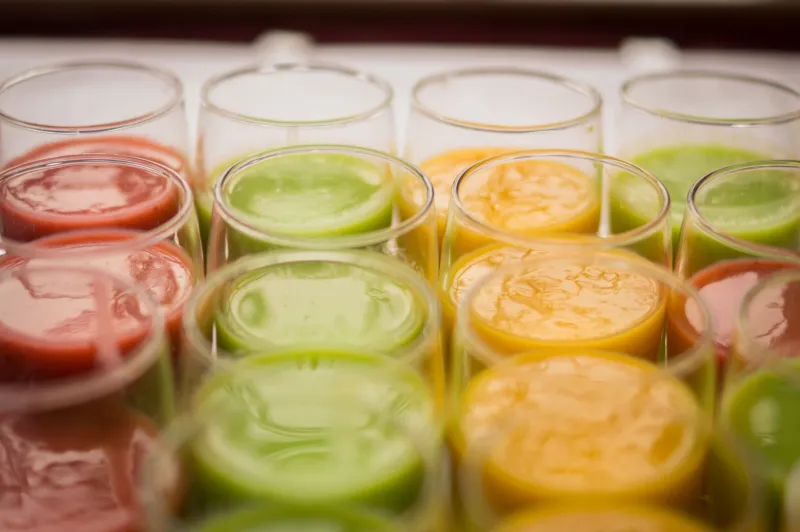
The Kitchen Counter Showdown: Why Your Blender Will Never Beat a Real Press
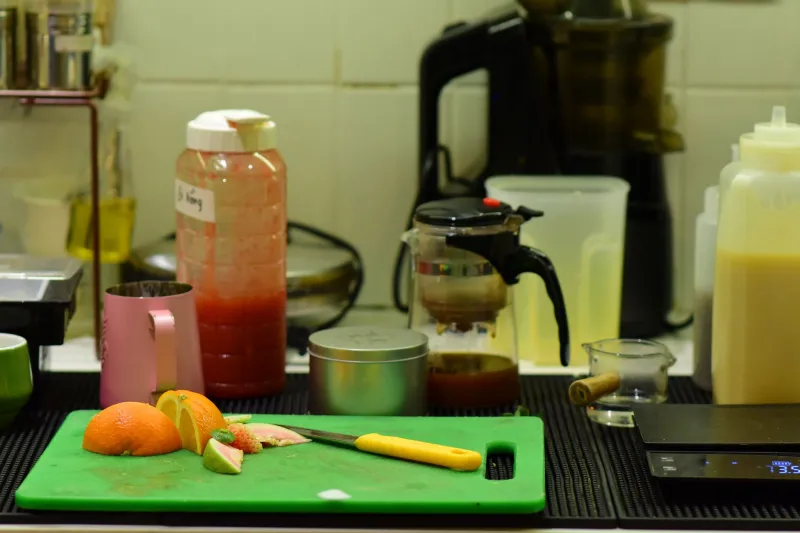
You've done it again. You're standing in line at your local juice spot, watching another $12 leave your wallet for a bottle of green goodness, and you think: I could just make this at home.
Maybe you can. But before you click "add to cart" on whatever juicer the algorithm is pushing this week, let's have a real conversation about what happens between your kitchen counter and your cup — and why the equipment matters more than the marketing.
Three Machines, Three Completely Different Drinks
The home juicing world basically splits into three camps, and they're not interchangeable.
The blender is the one you probably already own. It doesn't juice anything — it purées. That means everything you put in comes back out, fiber included. Great for smoothies, but if you're expecting that clean, silky, juice-bar texture, a blender will hand you something closer to a smoothie bowl in a glass. You can strain it through a nut milk bag, but congratulations, you've just added a 20-minute chore to your morning.
The masticating juicer (often called a "slow juicer") chews produce with an auger, typically running $100 to $400. It's the workhorse of home juicing — solid yield, decent nutrient preservation thanks to low-speed extraction, and cleanup that won't make you weep. It's not technically cold-pressed, but it's the closest most people get without a second mortgage.
The hydraulic press is the real deal. Two-step extraction — grind, then press with serious tonnage — is exactly what commercial juice bars use. The catch? Entry-level home presses start around $300 and climb fast, and they demand more counter space than most NYC kitchens are willing to surrender.
The Math Nobody Wants to Do
Let's be honest about cost, because this is where the decision actually gets made.
A typical 16-ounce cold-pressed green juice at a quality shop runs $10 to $13. The raw ingredients — kale, cucumber, celery, apple, lemon, ginger — cost roughly $3 to $4 retail at a standard US grocery store, less if you hit a farmers market or Costco.
If you drink juice three times a week, you're spending around $150 a month at the juice bar versus $45 in produce. That's a $105 monthly gap. A $300 press pays for itself in under three months. Even a modest $150 masticating juicer is in the black by week six.
But here's the fine print: DIY only wins if you actually use the machine. The graveyard of barely-used juicers in American garages is real. If your habit is one juice a week and half of those happen on the go, keep buying. If you're a daily drinker, the numbers tilt hard in your favor.
What Commercial Equipment Does That Yours Can't
No sugarcoating: your $300 setup won't replicate a commercial operation. Pro shops use presses generating thousands of pounds of force, extracting measurably more juice per pound of produce. They also use commercial-grade produce — often uglier, denser, and cheaper per pound than the waxed, shiny stuff at your supermarket.
The yield difference is real but not devastating. Expect a good home masticating juicer to extract 70 to 85 percent of what a commercial press would from the same produce. For a daily habit, that gap costs you a few extra carrots, not a dealbreaker.
Three Recipes That Punch Above Their Price Point
These are built for a masticating juicer, but they'll work in a press too.
The Green Reset: Two cucumbers, four celery stalks, a fistful of kale, one green apple, half a lemon, a thumb of ginger. Taste it against the juice bar version — the lemon and ginger ratio is where most home attempts fall flat. Be generous.
The Beet Situation: One beet, two carrots, one orange, half an apple. The trick is juicing the citrus last so it rinses the sweeter pulp through the machine. Earthy, gorgeous, and it'll stain your cutting board as a badge of honor.
The Golden Hour: Three carrots, one orange, a thumb of turmeric, a pinch of black pepper (stirred in after — it activates the curcumin). Tastes like a farmers market in October.
The Honest Bottom Line
Here's our take: the juice bar and the home juicer aren't enemies. The bar is where you discover what you love, get inspired by combinations you'd never attempt, and grab something excellent when life is chaos. The home machine is where the daily habit becomes affordable and personal.
Start with the machine that matches your actual life — not your aspirational one. Your wallet, and your 7 a.m. self, will thank you.